

For many small and medium-sized businesses in Canada, growth does not fail because of a lack of demand. It fails because systems that once worked fine suddenly cannot keep up. More customers mean more data, more coordination, and more chances for things to slip through the cracks.
This is why custom web apps are becoming an important tool for scaling. Instead of forcing growing businesses to juggle disconnected software and manual work, custom applications help streamline operations in a way that matches how the business actually runs.
This matters because Canadian SMEs play a huge role in the economy. According to Statistics Canada, small and medium-sized enterprises employ over 9.5 million people, representing more than half of all employment in Canada.
When SMEs scale efficiently, the impact is felt across industries, communities, and the wider economy.
Why growth becomes difficult as businesses expand
Early-stage businesses often rely on spreadsheets, emails, and basic tools. At a small scale, these methods feel manageable. As order volumes rise or teams grow, small inefficiencies start piling up.
Common challenges include slow approvals, repeated data entry, unclear ownership of tasks, and customer information spread across multiple platforms. None of these issues seems serious on its own, but together they slow down operations and increase mistakes.
This is where web application development becomes less about technology and more about operational clarity. A custom web app helps replace fragmented processes with a single system that grows alongside the business.
What makes custom web apps more effective than standard software
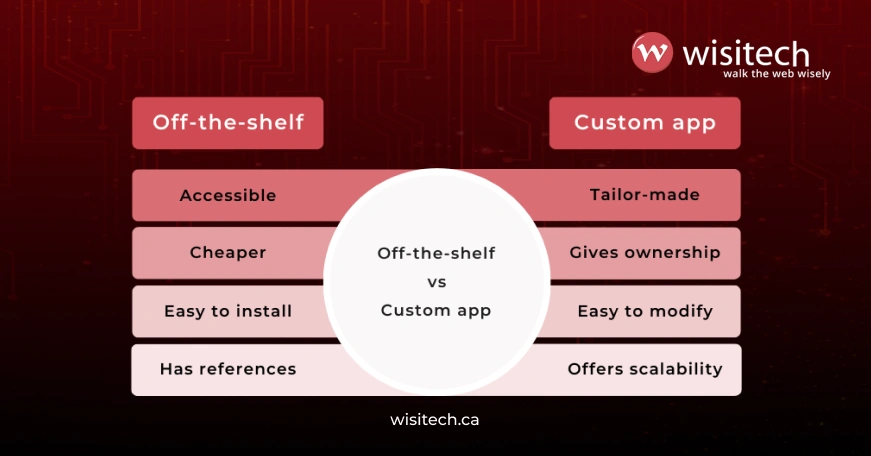
Recent industry data shows that many organizations are turning away from one-size-fits-all solutions because they do not fit unique business needs. A 2025 analysis by Andersen Lab noted that many businesses adopting off-the-shelf software face limitations in customization and scalability, leading companies to choose tailored systems that align with actual workflows and growth plans.
Custom web apps allow teams to unify customer data, orders, internal tasks, and reporting in one place, rather than forcing teams to adapt their processes to fit rigid, generic software. This alignment improves efficiency, reduces confusion, and supports smoother scaling as operations grow.
How business process automation supports scaling
One of the biggest advantages of custom web apps is business process automation. Automation does not mean replacing people. It means reducing repetitive work that slows teams down.
For growing businesses, automation often helps with tasks such as:
- creating invoices automatically when work is completed.
- sending reminders for appointments or pending payments.
- updating order or project status without manual input.
- routing internal requests to the right person.
These small efficiencies save time and reduce errors. As volume increases, automation helps businesses scale without needing to increase headcount at the same pace.
This aligns closely with Canada’s broader push toward digital transformation, which focuses on helping businesses modernize operations and improve productivity.
The federal government actively supports this shift. Through the Canada Digital Adoption Program, eligible SMEs could receive:
- grants covering up to 90% of a digital adoption plan (to a maximum of $15,000).
- access to interest-free loans up to $100,000 through BDC to implement those plans.
Centralized data helps teams work with confidence
As businesses scale, data management becomes a major challenge. Customer records, order details, and financial information often live in different systems. This leads to duplicated work, outdated information, and missed follow-ups.
A custom web app can act as a single source of truth. Everyone works with the same data, whether they are in sales, operations, or support. This improves coordination and makes onboarding new employees much easier.
Improving customer experience without adding more staff
Customer expectations continue to rise. According to industry data by HubSpot, 78% of customers prefer to use self-service to resolve simple issues, rather than contacting a live representative. This means that when businesses offer reliable self-help options, customers can find answers faster on their own. Research also finds that well-designed self-service tools increase overall satisfaction and allow teams to focus on more complex issues, improving both speed and quality of support.
In addition, over 60% of organizations increased self-service investment, such as FAQs, knowledge bases, or online portals, as a standard part of digital experiences. These options let customers check order status, view invoices, and submit requests without waiting for a response, reducing routine inquiries and supporting a smoother, more responsive relationship between businesses and their customers.
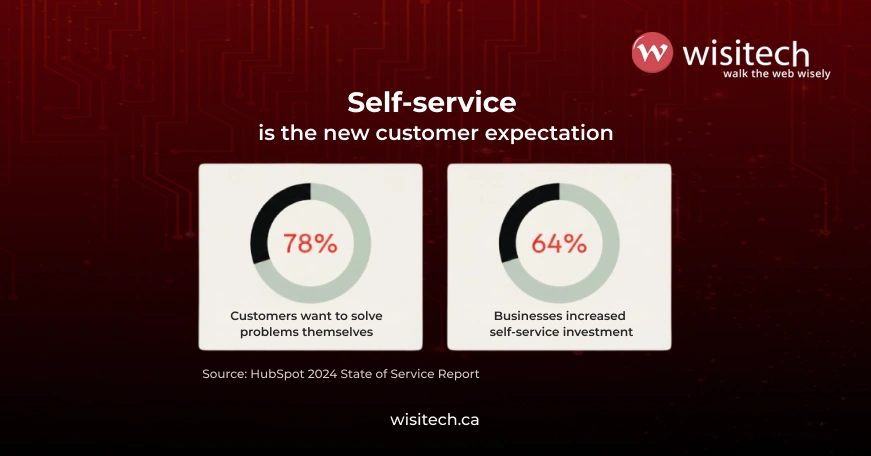
Together, this data shows not just a preference but a growing expectation for self-service and digital interaction tools. When customers can find what they need on their own, they feel more informed, supported, and confident in the brands they do business with, without requiring additional staff to handle every routine question.
Turning everyday activity into useful insights
Scaling generates more data, but data alone does not help unless it is easy to understand. Many SMEs struggle to see patterns once operations become more complex.
Custom web apps can include simple reporting tools that turn daily activity into clear insights. Business owners can see where delays occur, which services perform best, and where time is being lost.
Choosing where to start
Not every business needs a large system right away. The smartest approach is to start with the area causing the most friction, whether that is order management, customer communication, billing, or internal approvals.
For many Canadian SMEs, the first custom web app focuses on organizing core operations. Once that foundation is in place, additional features and automation can be added gradually.
Preparing for sustainable growth
Scaling successfully is not about doing everything faster. It is about doing the right things more efficiently. With the right custom web apps, thoughtful business process automation, and a clear approach to digital transformation in Canada, SMEs can grow without losing control of their operations.
When you are ready to build custom web apps that support more accurate reach, smoother workflows, and long-term growth, Wisitech can help design solutions tailored to how your business actually works. Contact us to learn how custom web applications can support your next phase of growth.